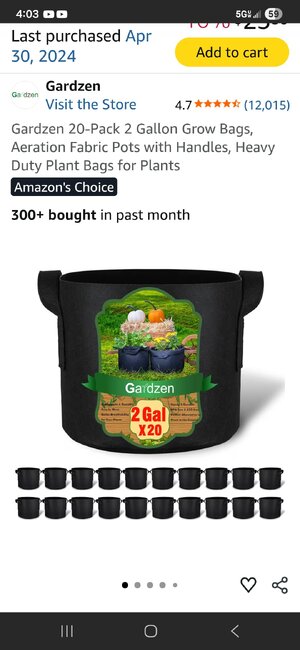
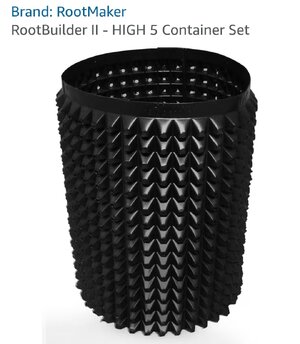
If those bags are buried in the ground, I doubt they are effective at root pruning. There are many ways to grow trees. A root pruning system is one. The benefit of root pruning is that it generates a root system with many terminal roots which increases the efficiency of the uptake of water and nutrients. Because roots pruned (either air pruned as with above ground containers or with constriction using in ground bags), the energy that would otherwise go into a tap root goes both into top growth and root development.
Nothing is free. The downside of a root pruning system is that you don't get a tap root. So, in arid environments, where trees need to have deep roots to get beyond the soils that dry out, trees can die. In my environment, root pruned trees do well, so that is where most of my experience is.
I sold all my root pruning containers a few years ago when I finished up with my major tree project at the farm. I now just dabble. I tried a form of direct seeding last year. I cold stratified and germinated chestnuts in the spring in a 5 gal bucket full of medium and peatmoss. Before the roots hit the bottom or entangled, I directly planted these seedlings in their final location. They are near my retirement home, not the farm, so I could provide TLC. They all survived, but are growing much slower than the chestnuts I grew in the past in rootmakers.
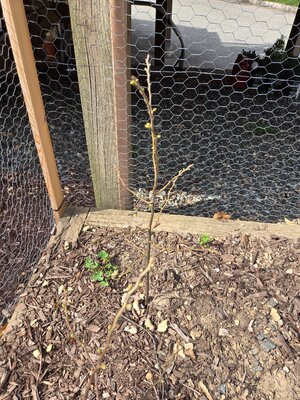
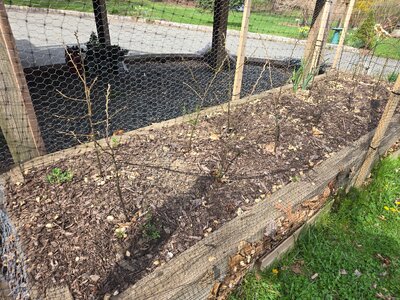
My thoughts, for what they are worth, are to just let your trees grow where they are this year since they broke dormancy. I would wait until they go dormant before transplanting to the final location. When you transplant, I would check to make sure you don't have any j-hooking or circling roots in those bags. Trees with these may look great when young but don't do well in the long run. If you have j-hooking or circling, I would manually prune them and treat them like bare root trees.