I'm getting a tractor

I thought I'd give y'all a post-mortem on how the food plots did.

First off, the final take: Six hunters took 4 bucks over 2 weeks + 1 ML weekend in October. Most of us had opportunities at doe, but it was still early in season. That's sub-par for our camp.

Now for the plots. Here is the description of what I planted back on Labor Day: Food Plots, 2025

How did they turn out? Here is an excerpt from my weblog:


If you looked at our plots on the last day of season, you’d see green nearly everywhere with a few obvious failures. The deer were munching on them as soon as they germinated. By the start of season, you could see deer, turkey– even squirrel– hitting the plots. However, I would only call them a partial success.


What worked? All the cereal grains came up. I used several Buck-on-Bag mixes that contained rye, barley or wheat, and they all sprouted, and that formed the majority of what you see when you look out over my verdant plains. Additionally, the clovers sprouted, albeit a bit late.


What didn’t work? I had placed a lot of hope on the various brassica mixes. At least the claims on the bags were that within a couple of weeks, I’d have knee-deep radishes, turnips, etc. I saw barely a hit of any of these come up. What did sprout got nipped in a hurry. I doped the heavy brassica mixes with clover and barley. Barley, because I needed to add bulk to the seed to get it through my bit ATV seeder, and clover so that I’d have something in the spring for turkeys.


Why? I can think of several reasons. First off, we planted just before a decent rain. We got an inch or so and then we got next to nothing for 3 weeks. Stuff sprouts and then dries out before it can really take hold. This was a bad year for rain. Second, we harrowed the plots after planting. Perhaps the brassicas ended up too deep. It is possible, but I find it hard to believe. Third might be nutrition. I put 12-12-12 down, and what did come up seemed to thrive. I’ll delve into this further, but I’m still thinking it was drought as the culprit. The last issue is predation. The turkeys and deer were on these plots immediately after they were planted. I think the tasty brassicas were all hoovered up before they could get going.


There was one patch up by the house that gives credence to this. I sowed it in part with a combination of “varieties of oats, rye, clover, canola, and more.” Another plot got dosed with “annual clover, turnips. radish, forage oats, and rye.” Both of these came up great. I would go and sit out in my new living room (What used to be the Thoughtful Spot) and watch deer come up and feed just after the construction crews knocked off. Examining these plots, I noticed the turnips and radish disappeared first.


image-1.jpg


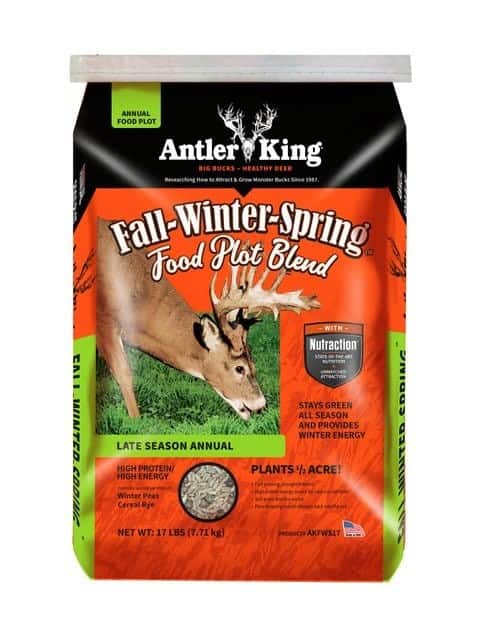
Then again, what the heck do I know? This is my first try with anything besides ladino clover and cover wheat, and my last food plot was 15 years ago. I’ve got a lot of learning to do. I would have loved to have given you a definitive review of the 11 different Buck-on-Bag seed mixes, but I don’t think that’s fair. I will give mention to Antler King’s Fall-Winter-Spring mix. Everywhere I used it, it sprouted, it did well and the deer and turkeys were consistently eating it.
Don't feel bad about subpar results from your fall plots, as you already know if you've been reading much on the forums, it was an off year for fall plots in much of the US. I'd say your results oon brassicas were mostly drought related.
 
There is no cure for lack of moisture. In the midwest our brassica go in end of July for the first try. I usually put more in with my cereal grains.

I would not harrow in PTT or rape. You may get away with it with the radish, it's a larger seed. I usually drill mine, but also have tilled. When I till my plots for my brassica mix this is how I do it. I till, then broadcast radish. Cultipack. Broadcast the PTT and rape, cultipack a second time. I spread the fert ahead of tilling.
 
YoderJack, you said " I find that with the mixes I use, it is faster for me to surface broadcast first, and then mow and spray. It has the same effect as crimping in that the cereal in that it forms a mulch layer holding in moisture for germination." Are you spraying after you throw and mow? I thought I was doing it right. I spray and let it burn down then throw my seed and, rather than mow, I run over it with my heavy cultipacker. I don't understand spraying gly for the last stage. This year I am going to add a step. Straighten the gangs on my rolling plow (very heavy offset disk) so I don't turn the soil, just cut it, after burn down. Then throw my seed and cultipack.

Because of the drought, my plots in reclaimed abandoned hay fields looked awful, very poor germination. But the deer seem happy and we have been successful hunting them.
 
YoderJack, you said " I find that with the mixes I use, it is faster for me to surface broadcast first, and then mow and spray. It has the same effect as crimping in that the cereal in that it forms a mulch layer holding in moisture for germination." Are you spraying after you throw and mow? I thought I was doing it right. I spray and let it burn down then throw my seed and, rather than mow, I run over it with my heavy cultipacker. I don't understand spraying gly for the last stage. This year I am going to add a step. Straighten the gangs on my rolling plow (very heavy offset disk) so I don't turn the soil, just cut it, after burn down. Then throw my seed and cultipack.

Because of the drought, my plots in reclaimed abandoned hay fields looked awful, very poor germination. But the deer seem happy and we have been successful hunting them.
You can spray gly earlier in the process if you like. A lot depends on how thick the weeds are. Gly does not affect seed. Using a cultipacker is even better. I will often uses a cultipacker instead of mowing. The order in which I spray gly is dependent on what I think will give me the best coverage based on the weed density. In some cases weeds can be chest heigh and I can't get good coverage with my boom sprayer, so I broadcast seed and mow first. If weeds are low and I feel I can get good coverage with the sprayer, I would spray first and then just cultipack and skip mowing.

My point was that the concept is to get seed on the ground with good soil to surface contact covered by a mulch layer to help hold in moisture. If you have a thick field of winter rye with no other weeds, crimping can work great and you don't need to spray gly. Crimping will kill WR at the right stage, but it won't kill all weeds, so if the field is weedy, I prefer to use the gly method. I looked hard at crimpers but decided not to get one because the cost wasn't worth it as I like to have a mix of weeds in my plots.

Any time you disturb the soil, even with min-till operations like light disking, you get new weed seeds to sprout. If I'm doing min-tillage before planting, I prefer to do that a week or two before planting and spraying gly. That gives any new weeds time to germinate and start growing so the gly kills them and the crop gets started with less competition.

No-till techniques, whatever the variation, work best when you have drought conditions as they preserve soil moisture.
 
Back
Top